
We often think friendship is the safe place, the bond where comparison fades and support comes first. Yet many groups carry a quiet tension that no one names. One friend gets praise, another goes silent. One shares good news, another changes the subject. No one says, “I feel threatened by you.” Still, the mood shifts. The group feels it.
Unconscious rivalry in friendship circles is the hidden struggle for value, belonging, attention, or influence.
We see this often. It does not always look hostile. In fact, it may appear as jokes, distance, subtle criticism, forgetting invitations, or a strange lack of joy when something good happens to someone. These moments matter because friendship groups are systems. When one person feels unseen, replaced, or less admired, the tension rarely stays private. It moves through the circle.
Why rivalry stays hidden
Most of us do not want to see ourselves as jealous or competitive with friends. It feels uncomfortable. Friendship is supposed to be generous. So the mind protects our self-image. We may tell ourselves that a friend is “too much,” “showing off,” or “always lucky,” when part of us is reacting to comparison.
This is why unconscious rivalry can last for a long time. It hides behind reasonable words. It also feeds on old emotional material. A person who often had to compete for care in childhood may react strongly when a friend receives attention. Another person may carry a deep need to be the special one in every group. When that role feels threatened, coldness appears.
What is hidden still shapes the group.
We think it helps to view rivalry not as a moral failure, but as a signal. Something inside the person, and often inside the group, is asking to be seen.
How it shows up in real life
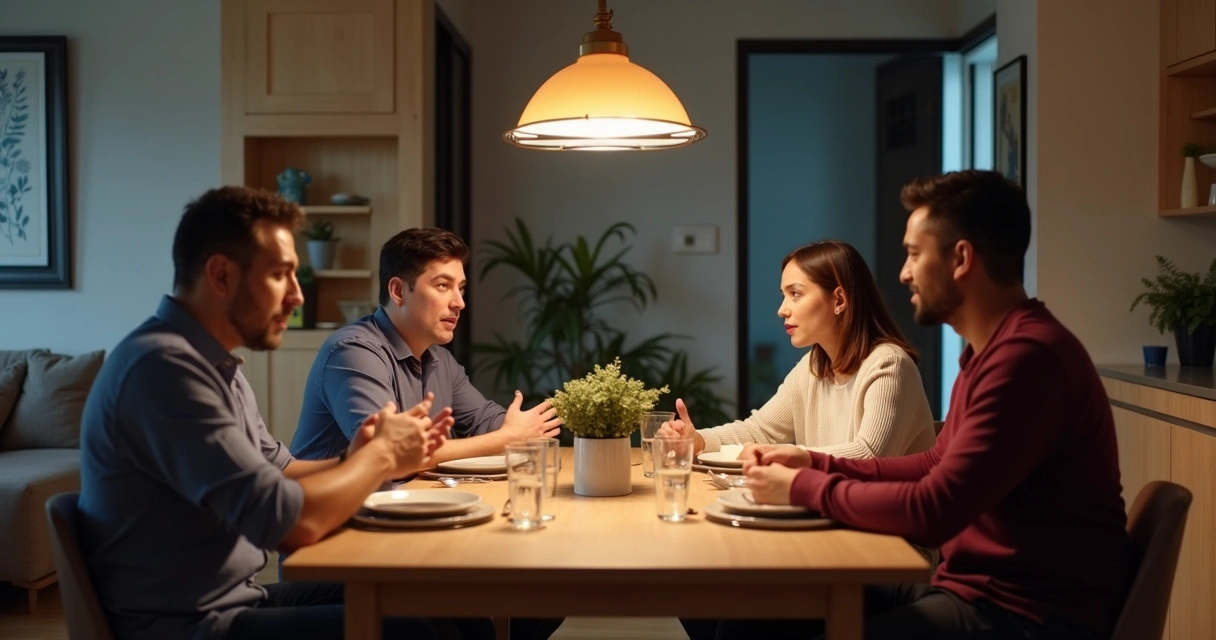
Unconscious rivalry rarely begins with an open fight. It starts in smaller ways. A dinner conversation becomes a contest. Praise for one friend is met with silence. Support becomes selective. The group starts forming invisible sides.
Some common signs include:
Backhanded compliments after someone shares success.
Frequent interruption when one person speaks.
Jokes that reduce another friend’s talent, looks, or relationship.
Withholding warmth after a friend receives attention.
Repeating private stories that make someone look smaller.
Excluding one person from plans without a clear reason.
We have all seen scenes like this. A friend announces an engagement, a promotion, or a new project. The room smiles, but one person goes flat. Another quickly brings up their own achievement. No one argues. Still, something lands heavily.
Rivalry grows when admiration feels scarce and identity feels shaky.
What research suggests
The emotional cost of friendship conflict is not minor. In a daily-diary study of adolescents across 14 days, days with friendship conflict were linked to higher anger, tension, confusion, and lower friendliness. Some effects, such as anger and low mood, even carried into the next day. While rivalry is not the same as direct conflict, it often creates the same emotional climate.
We also have useful insight on competition inside friendships. A cross-national study on early adolescent friendships found that hypercompetitiveness, the need to prove superiority, was tied to more conflict, less closeness, and more friendship breakups. Friendly competition did not show the same pattern. This distinction matters. Playful challenge can strengthen bonds. The need to win at the other person’s expense weakens them.
Why groups amplify rivalry
In a one-to-one friendship, tension is easier to trace. In a circle, things get more layered. Roles emerge. One friend becomes “the funny one.” Another is “the successful one.” Another is “the one everyone confides in.” When someone changes, the group may react. If the quiet friend becomes more confident, for example, others may feel unsettled without knowing why.
Groups also carry shared beliefs about worth. Beauty, status, money, romance, social ease, and even spiritual maturity can become hidden ranking systems. No one has to say it out loud. People sense it. Then they defend their place.
We think this is why rivalry in friendship circles can feel confusing. The issue is not always between two people only. Sometimes the whole group is organized around comparison.
How to respond without making it worse
If we notice unconscious rivalry, the first task is not accusation. It is awareness. Naming someone as jealous too early usually pushes the pattern deeper. A steadier response works better.
Here is a simple sequence that can help:
Pause before reacting. Notice what changed in the room and in your body.
Separate facts from interpretation. Ask what was said, what was done, and what you assumed.
Look for repetition. One odd moment may be stress. A pattern tells us more.
Speak privately when needed. Group confrontation often brings defensiveness.
Use clear language. Talk about impact, not character.
For example, we might say, “I noticed that when I shared my news, the tone changed and I felt dismissed.” This is different from saying, “You are jealous of me.” The first opens a door. The second usually closes it.
The goal is not to win the moral position, but to restore honesty and respect.

When you are the one feeling rivalrous
This part asks for maturity. If a friend’s growth irritates us, we may need to stop and ask what it touches in us. Is it fear of being left behind? Is it grief about our own stalled plans? Is it an old wound around not being chosen?
We do not need to shame ourselves for these reactions. But we do need to take responsibility for them. A friend’s light does not reduce our value, even if a part of us feels that it does.
Helpful inner questions include:
What story am I telling myself about their success?
What do I think it says about my place in the group?
Have I attached my worth to being ahead, admired, or needed?
Sometimes one honest admission changes everything. We may say, “I want to be supportive, but I also notice your news brought up something hard in me.” This kind of truth, shared with care, can stop silent damage.
Protecting the friendship circle
Not every friendship survives rivalry. Some people stay attached to comparison and cannot tolerate mutuality. Still, many groups can heal when members become more direct, less performative, and more willing to celebrate difference without ranking it.
Healthy circles tend to make room for many forms of value. Not everyone has to shine in the same way. One friend may be bold, another steady, another deeply perceptive. When worth is not treated like a limited resource, rivalry loses force.
Conclusion
Unconscious rivalry in friendship circles is painful because it attacks trust quietly. It does not always shout. Sometimes it withdraws, mocks, competes, or withholds joy. Yet once we see the pattern, we can respond with more clarity. We can ask what fear, wound, or role is being activated. We can refuse hidden contests. We can speak with more honesty. Friendship grows better where comparison loses its grip and each person can belong without having to outshine the others.
Frequently asked questions
What is unconscious rivalry in friendships?
It is a hidden form of competition between friends. It may involve attention, status, affection, success, or influence. The people involved may not fully admit what they feel, but the tension shapes behavior.
How can I spot rivalry in my group?
We can spot it by looking for repeated patterns such as subtle criticism, lack of joy for someone’s good news, exclusion, constant comparison, or jokes that reduce one person. The pattern matters more than a single awkward moment.
How to deal with rivalry among friends?
Start with observation and calm reflection. Then speak directly, preferably in private, about what you noticed and how it affected you. Focus on behavior and impact. If the group is willing to be honest, trust can improve.
Can unconscious rivalry ruin friendships?
Yes, it can. If rivalry turns into repeated disrespect, emotional coldness, or the need to prove superiority, friendship may erode over time. Still, some relationships recover when people face the tension instead of denying it.
What causes rivalry in friendship circles?
It often grows from insecurity, comparison, old emotional wounds, fear of losing place in the group, or shared beliefs that worth is limited. Group roles can also feed it, especially when people feel trapped in who they are expected to be.