

We often look at our adult relationships and wonder why some patterns repeat themselves, even when we wish for change. Sometimes, a quiet tension arises during conflict, or we notice an urge to please or withdraw. Other times, we may feel stuck in a loop of misunderstanding or anxious attachment. Many of these repeated patterns are shaped by family dynamics we absorbed long before we had conscious awareness of them. These are called unconscious family patterns, and they shape the foundations of how we relate to others throughout life.
Understanding unconscious family patterns
As children, we adapt to our families in ways that help us feel safe and accepted. The ways we seek comfort, manage anger, or respond to stress are rarely developed in a vacuum. Instead, they are learned through everyday interactions, observations, and even things left unsaid in the household environment.
- Who was the “strong” one in the family?
- How were emotions like sadness or anger handled?
- What roles did you or your siblings take on in family conflicts?
- Who comforted whom, and who was left out?
Over time, these everyday dynamics create internal blueprints for how we handle intimacy, conflict, and care. These patterns can feel so natural that we seldom question them—until we find ourselves repeating them in our adult relationships.
Invisible rules at home write silent scripts for love and connection.
Family systems and the invisible web
In our experience, families function as interconnected systems. Each person’s actions influence, and are influenced by, everyone else. Some common systemic dynamics include:
- Role assignment: Children may become the “responsible one,” the “caretaker,” or the “troublemaker” in response to family needs.
- Loyalty and belonging: There's often a strong pull to stay loyal to family traditions, unspoken agreements, or even suffering ("no one succeeds beyond the family,” or “we don’t talk about feelings”).
- Emotion management: Some families express emotions loudly, others hide them. The way feelings are managed, ignored, or redirected shapes how we later manage our own emotions.
- Belief patterns: Beliefs about money, success, closeness, or independence are often inherited and rarely questioned.
These dynamics move beneath the surface, guiding behaviors and choices. We might notice that we attract partners who evoke the same feelings we experienced with our parents—comfort, frustration, or even invisibility.
How these patterns show up in adult relationships
Unconscious family patterns do not stay locked in childhood. They continue to influence intimacy, trust, communication, and even conflict in adulthood. Sometimes, the influence is gentle—a simple preference for familiar routines or types of humor. At other times, it can be limiting or painful, like repeating cycles of misunderstanding or withdrawal.
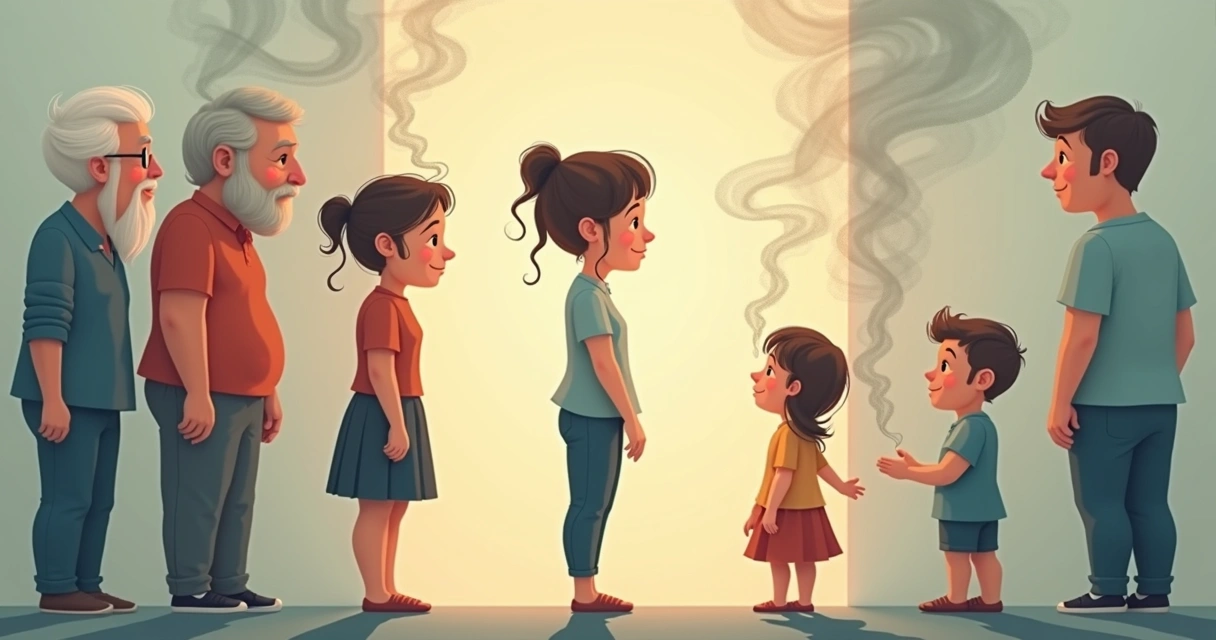
In our work, we’ve identified several ways these patterns become visible:
- Repeating relationship cycles: For example, someone who experienced emotional distance at home may seek “unavailable” partners or find closeness overwhelming.
- Triggered responses: We may feel a strong reaction to a partner’s words or actions, not because of the present moment, but due to old family scripts.
- Unspoken rules and expectations: Expectations about chores, communication, or emotional support that never get clearly discussed, leading to frustration.
- Conflict style: Some people avoid conflict because it was never safe at home, while others argue to resolve even small tension.
We play out the shadows of childhood long after we have left home.
Why do we repeat family patterns?
We have found that repeating family patterns is rarely a sign of weakness or lack of effort. In fact, these patterns are often unconscious strategies that once helped us to adapt and cope. They feel safe because they are known. Even if a pattern is limiting, its familiarity offers a sense of control in uncertain situations.
Some reasons we repeat these patterns include:
- Belonging needs: Deep down, we may fear that abandoning family patterns means betraying the people we love.
- Unfinished business: Sometimes, we unconsciously “replay” childhood dynamics with partners, hoping this time, we can achieve a different outcome or get the care we missed.
- Automatic responses: Fast emotional reactions or habits can take over before we even have time to reflect.
What may have kept us emotionally safe as children can restrict growth in adult relationships. Recognizing these patterns is the first step to developing new options for connection and intimacy.
Recognizing and changing patterns
We believe that awareness, self-compassion, and systemic understanding can help disentangle old family patterns. This process, however, doesn’t happen overnight. The following steps have helped many people move toward more conscious, healthy relationships:
- Reflection and awareness Silently observing moments of strong emotions or repeated difficulties in relationships can bring hidden patterns to light. Simply noticing is the first act of change.
- Curiosity, not blame Rather than judging ourselves for repeating familiar mistakes, we can get curious about where these patterns started and who taught us these “rules.”
- Conscious choice As we become aware of old patterns, the door opens to choose new behaviors, even if they feel unfamiliar at first.
- Communication Clearly expressing needs, boundaries, and fears with partners creates room for new experiences beyond the family blueprint.
- Seeking support Talking with trusted friends, family members, or professionals can give perspective and validation along the journey.
Change becomes possible when we turn hidden habits into conscious choices.

Taking these steps can start to untangle old scripts and make room for experiences of connection, trust, and intimacy that fit who we are now—not just who we had to be as children.
Healing is possible
We have seen that with willingness and support, people can rewrite patterns that no longer serve them. Healing may involve periods of confusion or discomfort, as familiar habits feel hard to break, but new relational experiences can emerge. Throughout the process, self-understanding and compassion are key.
Growth happens in the light of awareness and acceptance.
Conclusion
Unconscious family patterns shape how we give and receive love, how we handle conflict, and how we experience intimacy as adults. These patterns began at home, carried through subtle habits, emotional reactions, and ways we communicate. By recognizing, understanding, and compassionately challenging these inherited blueprints, we can change the way we relate—one conscious choice at a time. Growth becomes possible not despite our origins, but with deeper clarity about how they shaped us and what stories we wish to carry forward.
Frequently asked questions
What are unconscious family patterns?
Unconscious family patterns are automatic behaviors, beliefs, and emotional responses that we absorb from our family system in childhood, often without realizing it. These patterns influence our actions and feelings in adult relationships, frequently operating outside our awareness.
How do family patterns affect relationships?
Family patterns impact relationships by shaping how we respond to closeness, handle conflict, and express needs or emotions. These patterns can create both strengths and challenges in adult relating, affecting intimacy, trust, and communication styles.
Can I change unhealthy family patterns?
Yes, we believe that with awareness and willingness, it is possible to change unhealthy family patterns. Recognizing the patterns, practicing self-compassion, seeking support, and consciously choosing different behaviors are key steps in this process.
How to recognize my family patterns?
Start by noticing repeated difficulties or emotional triggers in your relationships. Reflect on how your family managed conflict, showed love, or handled stress. Journaling and open conversations with trusted people can also provide insight into these patterns.
Why do I repeat relationship mistakes?
People often repeat relationship mistakes because their responses and choices have been shaped by unconscious patterns from their family system. These habits feel familiar and safe, but with awareness and new experiences, it is possible to make different choices over time.