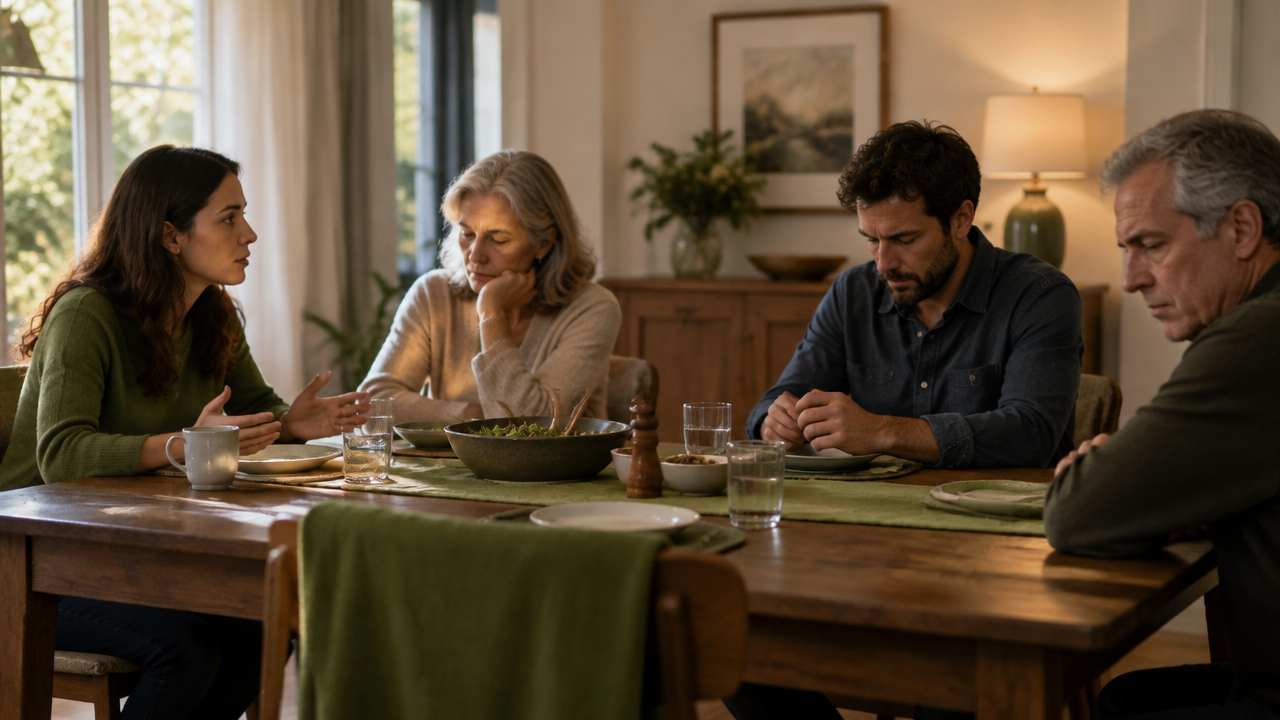

We have all heard the stories: inherited pain, family secrets, histories that repeat themselves like old songs. Sometimes, the past stays alive. It shapes the way we feel, love, and even raise our own children. For many, blame becomes a silent member at the table—an invisible force carried across generations.
But what if moving beyond blame is possible? What if forgiveness could break cycles and change not only our lives, but the lives of those who come after?
The ripple of inherited pain
Transgenerational trauma happens when the pain of one generation silently ripples into the next. This cycle often happens without intention. Childhood scars, unmet needs, or unresolved family conflict can appear in children and grandchildren—sometimes even when the details are lost or hidden.
According to a scoping review on intergenerational transmission of parental adverse childhood experiences, stress, trauma, and adversity have measurable impacts that cross generational lines. The way our parents and grandparents experienced hardship can shape our own behavior, mental health, and opportunities—sometimes quietly and sometimes more forcefully.
Family stories of loss, migration, or abuse become woven into daily life. Unexplained fears, loyalty to ancestors’ wounds, or repeating patterns can keep us stuck. Sometimes, these patterns are so subtle that we recognize them only much later.
What we cannot forgive, we are often bound to repeat.
Beyond guilt and fault: A wider view
When we speak about forgiveness, people often think about simple apologies or letting someone “off the hook.” But transgenerational forgiveness asks for something different. Instead of focusing only on individual wrongs, we are invited to see ourselves as part of wider systems—a lineage, a web of influence.
This shift is not about excusing harm. Moving beyond blame means recognizing how complex our stories are, and how much we are shaped by what came before our birth. Instead of blaming a parent, grandparent, or community, we can notice the patterns that shaped them, too. Grief, war, poverty, or ancestral trauma do not just disappear; they leave marks on hearts and minds.
Research shows that the effects of hardship can cascade through generations. In a systematic review analyzing intergenerational trauma, evidence suggests that even when descendants do not know the full stories of their ancestors, they still feel the impact. This calls for a different kind of responsibility.
A wider view does not remove accountability. Instead, it asks us to understand the bigger picture. We can recognize harm, work for healing, and still choose a new path.
How do patterns move through generations?
A simple question often brings us to the heart of the matter: How do we inherit wounds and beliefs from those who came before?
Science points to several answers:
-
Family stories and silence: The narratives families tell (or hide) become early filters for how children see themselves and the world. Silence about the past often breeds confusion, shame, or fear.
-
Attachment and modeling: Children learn how to relate, cope, and handle adversity by watching adults. When adults are stuck in their own pain, children often adapt in ways that echo those same struggles.
-
Biological pathways: Recent research summarized in a systematic review of transgenerational trauma outlines how trauma can even affect brain chemistry, stress hormones, and gene expression—so the consequences are not only emotional, but physical.
-
Wider systems: Societal and historical events—wars, displacement, or discrimination—affect whole communities. These influences echo within families for generations.
Understanding these pathways makes it clear: forgiveness goes far beyond a single moment or relationship.
What does forgiveness look like across generations?
Many people struggle even to imagine forgiving what they cannot fully name. Yet, transgenerational forgiveness is not a single act. It is a process. We see it as a series of steps that include recognition, grief, understanding, and a conscious choice to do things differently.
Forgiveness here means breaking free from inherited cycles without erasing the depth of what happened. It is seeing people as both shaped by, and yet not defined only by, old stories. It is choosing maturity over resentment.
Practical steps toward transgenerational forgiveness
From our experience, the journey begins with self-reflection and openness to uncomfortable truths. It asks us to move carefully—and sometimes, bravely—through discovery, acceptance, and change. We recommend a sequence like the one below, but each person will find their own pace.
-
Acknowledge the pattern. Before anything can heal, we have to notice it exists. This means asking honest questions about recurring themes, emotional triggers, or repeating conflicts within the family.
-
Seek stories, not just facts. What unfinished stories, secrets, or experiences lie beneath the surface? Sometimes, older relatives are willing to share, other times we rely on what's left unsaid. Both teach us.
-
Feel the grief. To forgive transgenerational wounds, we must first let ourselves feel the sadness, anger, or disappointment that may have been inherited. Grieving what was lost—innocence, opportunity, or love—is part of making space for change.
-
See the larger system. Instead of focusing only on blame, try to map how circumstances shaped the choices of those before us. This does not excuse harm but brings understanding.
-
Choose different actions. Once we recognize the pattern, we can make small, mindful shifts—parenting differently, communicating with more openness, or naming feelings that once stayed hidden.
-
Rituals and symbolic acts. Many find it healing to create rituals—writing letters (even unsent), lighting candles, or creating art—to mark their intention to forgive and move forward.
-
Repeat and sustain. Transgenerational forgiveness is not achieved in one moment. It is practiced, remembered, and sometimes falters—then begins again.
Forgiveness is a choice we make, again and again.
The promise of choosing differently
Studies, such as research on parental adversity and child development in vulnerable families, demonstrate that breaking patterns of inherited struggle brings real benefits. Children whose parents can process and integrate family pain show stronger emotional resilience and more stable relationships.
We have seen it in our own circles. A parent who chooses to talk about their past with honesty prevents their child from carrying unspoken shame. Siblings who work together to forgive ancestral mistakes often forge deeper bonds. A grandchild who learns to name their family’s wounds becomes freer to imagine a different future.
Forgiveness across generations does not erase pain, but it gives us a chance to write a new chapter.
Conclusion
Forgiving what we cannot forget is one of the hardest tasks we face. Yet, in our experience, it is also the one that opens doors for true growth. Breaking the chain of inherited blame does not mean ignoring the past. Instead, it means holding it in the light and choosing, again and again, to respond with honesty and compassion.
By stepping beyond simple blame, we offer ourselves—and those who come after—a greater freedom. That is the real promise of transgenerational forgiveness.
Frequently asked questions
What is transgenerational forgiveness?
Transgenerational forgiveness is the process of letting go of blame, resentment, or inherited anger tied to family wounds that stretch across multiple generations. Rather than focusing only on individual wrongs, it recognizes how pain and patterns can be passed down and chooses to break the cycle through understanding and conscious choice.
How to practice transgenerational forgiveness?
To practice transgenerational forgiveness, we suggest starting with self-reflection and honest recognition of family patterns. Gathering stories, grieving what was lost, and choosing new ways to interact are helpful. Meaningful rituals and repeated acts of compassion toward ourselves and our ancestors also support the process.
Why is forgiveness beyond blame important?
Choosing forgiveness beyond blame is important because it stops cycles of pain that otherwise repeat silently through families and relationships. It allows us to understand the full story behind the harm, so we can choose actions that build better futures rather than hold onto resentment.
Can transgenerational forgiveness heal families?
Yes, healing is possible. Studies show that when families acknowledge and process inherited pain together, communication improves, trust deepens, and resilience grows. Forgiveness in this sense does not mean forgetting harm, but working toward emotional freedom for everyone involved.
Is it possible to forgive past generations?
It is possible to forgive past generations, even if we never meet them personally. Forgiveness can be an internal process that involves understanding their struggles, accepting what cannot be changed, and choosing not to carry inherited grievances into the future.