

We do not live as fixed characters. We move through life, and our roles move with us. A child who once received care may later become the one who coordinates a household. A quiet sibling may turn into the family mediator. A worker who led teams may one day need support instead of giving it.
Systemic roles are the positions we take in relationships, groups, and family life, often without fully noticing it.
In our experience, these roles are not random. They respond to age, need, loss, social context, and the hidden balance each system tries to keep. Sometimes the shift is expected. Sometimes it feels abrupt. In both cases, role change can stir conflict, relief, guilt, or growth.
We have all seen this in simple scenes. A young adult returns home after years away, and old family habits return in minutes. A parent retires, loses a work identity, and starts speaking more into adult children’s choices. A grandparent who held the family memory begins to fade, and someone else quietly takes that place.
Roles change. Bonds react.
How roles begin
Our first roles often form before we can name them. In childhood, we adapt to what the family seems to need. One person becomes responsible. Another becomes funny. Another stays invisible to avoid adding tension. These are not always conscious choices. They are often answers to pressure, love, fear, and belonging.
As we grow, other systems shape us too:
School may reward the achiever role.
Friend groups may assign the listener, organizer, or rebel.
Work may strengthen the helper, expert, or authority role.
When a role brings approval, safety, or identity, we may hold onto it for years. That can be useful. It can also become narrow. A person who was praised for being “the strong one” may later struggle to ask for help, even when life clearly asks for a new stance.
Adolescence and early adulthood
During adolescence, roles start to widen. We test who we are in groups beyond the family. We often see a pull between loyalty to the old system and the wish to become distinct. That tension is healthy, but not always easy.
Developmental Psychology research examining adolescents in youth programs found that when young people held real roles, such as leader or teacher, they developed stronger inner motivation and skills like strategic thinking and perseverance. We think this matters because roles do not only reflect identity. They also build it.
When young people are trusted with meaningful roles, they often grow into new capacities.
Still, growth can create friction. A daughter who becomes more assertive may no longer fit the “easy one” role in her family. A son who begins caregiving may feel split between peer culture and family duty. These moments are not small. They often mark the first deep restructuring of relational position.

Midlife and the pressure of overlap
Midlife often brings role stacking. We may be earning money, raising children, caring for parents, holding partnerships together, and managing public responsibilities at the same time. Many people feel stretched here, not because they are weak, but because several systems are asking for presence at once.
This stage can expose old habits. The family fixer keeps fixing. The peacemaker keeps smoothing conflict. The provider keeps carrying more than can be sustained. Then life interrupts. Illness, divorce, job loss, or a child’s change in needs can force a role review.
We sometimes hear people say, “I do not know who I am if I am not the one holding everything together.” That sentence says a lot. It shows how a role can become fused with identity. If the role shifts, the person may first feel empty, irritated, or lost before feeling freer.
Work roles also matter here. A longitudinal study of older men on employment and health found that employment had a steady protective effect on health, and that the effect of marriage was shaped by employment status. We see in this a wider systemic truth: roles are not just labels. They influence meaning, status, contact, and even well-being.
Later life and role release
Later life often brings another deep shift. Some roles become lighter, and some fall away. Retirement may reduce public identity. Children become decision makers in areas once led by parents. Physical limits may require receiving care after decades of giving it.
For many people, this is tender territory. Letting go of a role can feel like losing a language one has spoken for years. At the same time, release can make room for quieter forms of presence: witness, elder, storyteller, blessing-giver, or simply a person no longer defined by output.
A longitudinal study from Tilburg University showed that over time people tended to hold fewer social roles and saw some of them as less central. Family roles stayed highly valued, while the weight of caregiving and work-related roles declined. We find this deeply human. Life narrows in one sense, but meaning does not disappear. It often becomes more focused.
As roles reduce with age, relationships often become more selective, but not less meaningful.
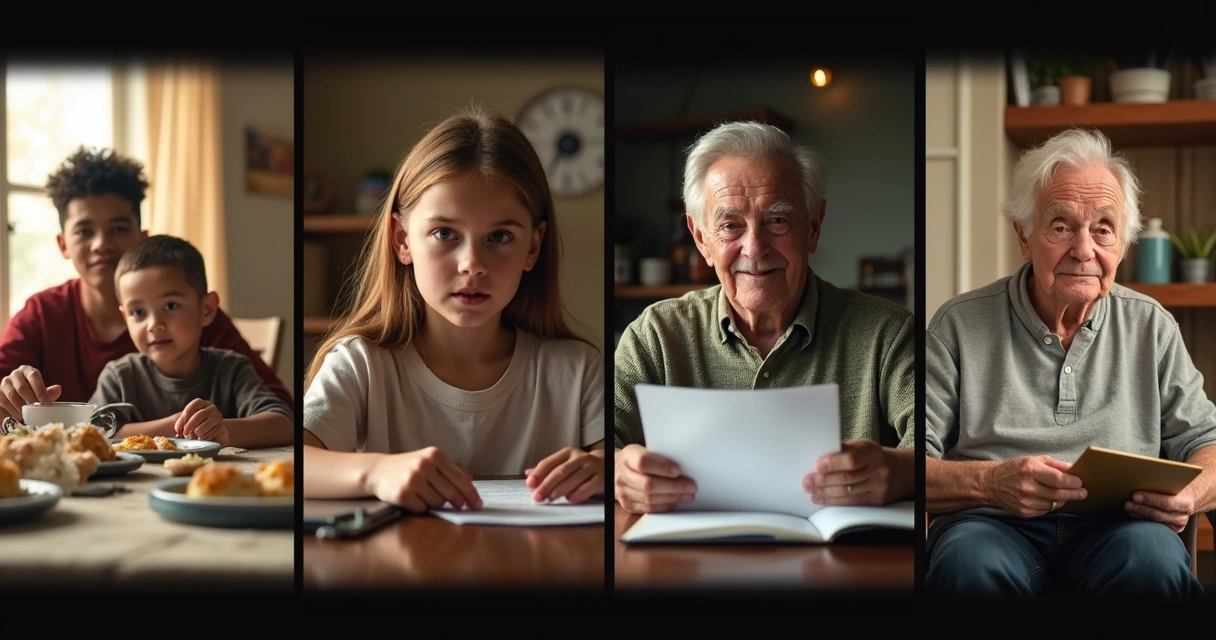
Why systems resist change
Even healthy role change can unsettle a system. If one person stops overfunctioning, others may need to step up. If a parent stops controlling, adult children may need to carry more responsibility. If a partner who stayed silent begins to speak clearly, the whole relationship must reorganize.
That is why role shifts often bring pushback. Not always because people are against growth, but because systems prefer what is familiar. We may say we want change, then react strongly when someone actually changes position.
We think it helps to notice signs like these:
Repeated conflict after one person becomes more independent.
Guilt when stepping out of a long-held family duty.
Confusion when a retired or widowed person loses daily structure.
Tension when younger members challenge old hierarchies.
These are not proof that the shift is wrong. Often, they show that the system is adjusting.
How we can move through role change
Role change asks for both honesty and patience. We do not need to reject every old role. Some still fit. Some need softer edges. Some need to end.
A grounded way forward often includes a few steps:
Name the role we have been carrying.
Ask when it began and what it protected.
Notice whether it still matches present reality.
Expect reactions from the system around us.
Build a new role through small repeated actions.
Sometimes the change is simple. We stop saying yes to everything. Sometimes it is harder. We accept care. We grieve a public identity. We let younger people lead. We speak from our real age, not from an old family script.
Conclusion
Across the lifespan, roles shift because life shifts. Bodies age. Families change shape. Work begins and ends. Loss enters. New bonds form. Through all this, we are asked again and again, “Who am I here now?”
Maturity is not keeping the same role forever, but meeting each stage with a role that fits reality more truthfully.
When we see systemic roles with more clarity, we do not become less responsible. We become more conscious. And from there, our choices can carry more respect, more balance, and more freedom.
Frequently asked questions
What are systemic roles in families?
Systemic roles in families are the positions people take in the family pattern, such as caretaker, peacemaker, achiever, outsider, or decision maker. Some roles are openly named, while others form quietly over time. They help the family keep balance, even when that balance is tense or unfair.
How do roles change as we age?
Roles change as we age because our needs, abilities, and relationships change. Children depend on care, adults often carry more duty, and older adults may move from active leadership into guidance or receiving support. Life stages bring new tasks, so the old role may no longer fit.
Why do systemic roles shift over time?
Systemic roles shift over time due to events such as adolescence, marriage, parenthood, illness, retirement, migration, separation, or death. Social context also matters. When one part of a system changes, other members often adjust their position in response.
Can changing roles affect relationships?
Yes, changing roles can affect relationships in strong ways. A shift in one person’s role can bring relief, conflict, distance, or closeness. If someone stops overgiving or starts setting limits, others may need to change too. That can feel uncomfortable before it feels stable.
How can I adapt to new roles?
We can adapt to new roles by noticing what has changed, naming the old expectations, and taking small steps that match the present stage of life. Clear communication helps. So does patience. Role change rarely feels smooth at first, but it becomes easier when our actions match current reality instead of past habit.