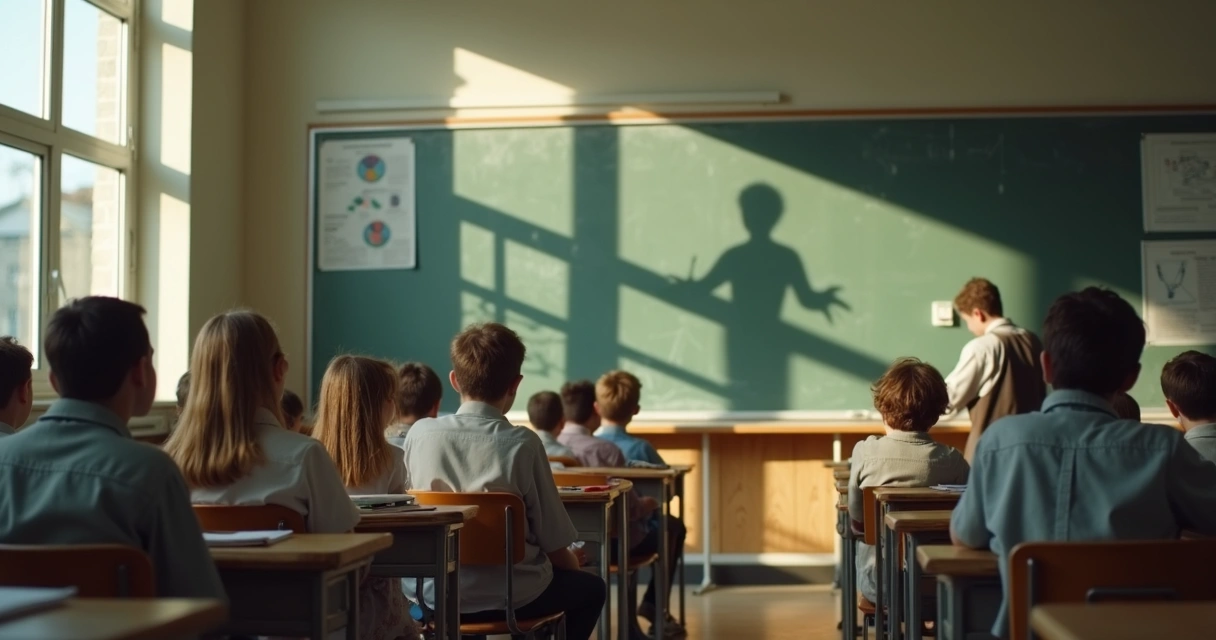
We often talk about schools as places of learning. That is true, but only in part. Schools also teach people how to belong, how to stay quiet, how to stand out, and sometimes how to hide. Much of this learning happens without anyone naming it.
Unconscious group behavior in schools is the set of shared reactions, rules, and roles that students and adults follow without fully noticing them.
A child enters a classroom and quickly senses what gets approval. Who speaks with ease. Who gets ignored. What kind of success receives praise. What kind of sadness gets dismissed. These signals do not stay on the surface. They form a social field, and that field shapes behavior over time.
Groups teach silently.
In our view, schools create unconscious group behavior through repetition, structure, reward, and emotional climate. A rule posted on a wall matters less than the pattern lived every day. If a class says it values respect but laughs when one student is exposed, the group learns the real rule. If a school says every voice matters but only celebrates the loud and fast, students notice that too.
How group behavior starts
Children and teens are highly sensitive to belonging. This is not weakness. It is part of human life. In school, belonging often depends on reading the room quickly and adapting just as quickly. Students copy what appears safe, admired, or normal.
We can see this in everyday moments:
Students laugh at a joke they did not find funny because everyone else did.
A quiet student avoids answering, not from lack of knowledge, but from fear of the group reaction.
A class begins to treat one student as the problem, and few ask how that role was assigned.
What looks like individual choice is often a group adaptation.
School routines strengthen this process. Bells, seating charts, grading systems, dress expectations, and public correction all send messages about order and worth. None of these are neutral. They shape how students read authority, competition, and acceptance.
We have seen how one class can become known as difficult, another as brilliant, another as immature. Once these labels settle in, people begin to act them out. Teachers expect certain behaviors. Students sense those expectations. Then the group delivers the script again.
What schools reward without meaning to
Not all school influence comes from formal policy. Much of it comes from subtle reward. A student may receive attention for being agreeable, funny, high-achieving, athletic, attractive, or emotionally contained. Another may learn that honesty creates discomfort, so silence becomes safer.
Social pressure is not a minor layer of school life. According to findings on the pressures teens are facing, many U.S. teens report pressure to fit in socially, look good, and get good grades. These numbers point to something larger than personal insecurity. They show shared norms working inside peer groups and school culture.
When a school overvalues image, students monitor themselves constantly. When it overvalues performance alone, students may hide confusion, compare obsessively, or attach worth to ranking. When adults reward compliance more than thought, students can become skilled at appearing fine while disconnecting internally.
How roles become fixed
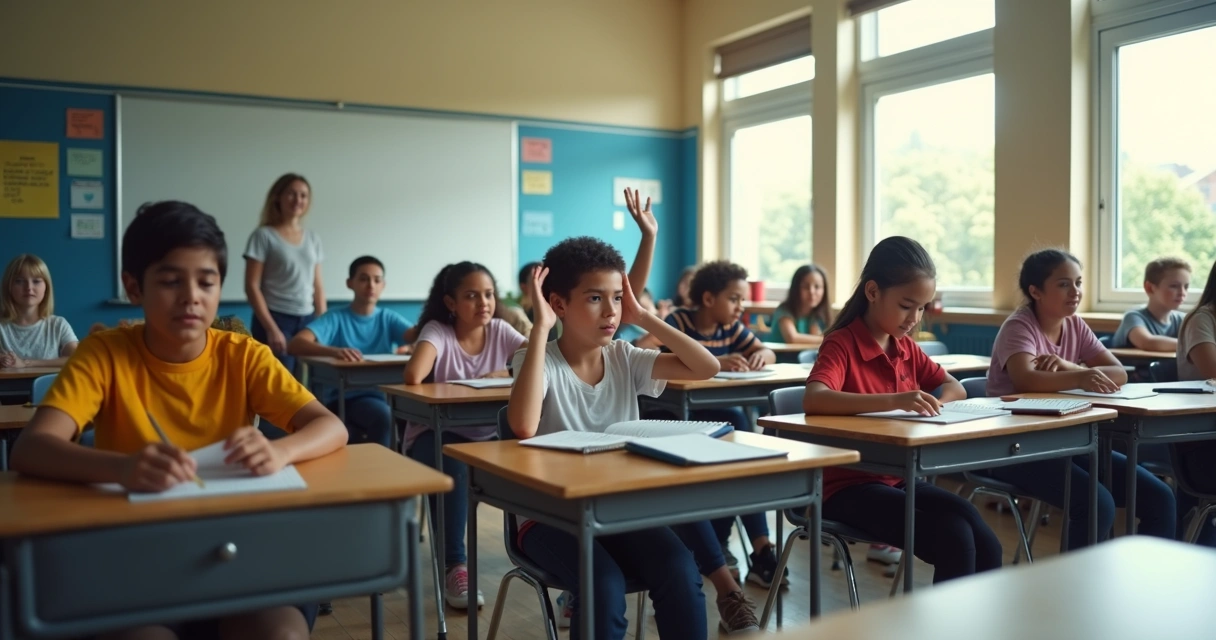
Every group tends to assign roles. In schools, this may happen fast. There is the high achiever, the troublemaker, the helper, the outsider, the clown, the invisible one. A role can begin as a reaction to one moment, then harden through repetition.
We think one of the most painful parts of school life is that roles can survive even when the person changes. A student who had one hard year may still be treated as unstable. Another who always pleased adults may feel trapped by goodness and afraid to fail.
This does not affect students only. Adults are pulled into roles as well. One teacher becomes the strict one. Another becomes the safe one. A principal may become the symbol of control. Staff groups also create loyalties, exclusions, and silent agreements. Students feel these tensions, even when no one speaks of them.
Once a role is shared by the group, the group starts protecting it.
That is why change can feel strangely unwelcome. A student tries to act differently, and the class resists. Not always openly. Sometimes with a smile. Sometimes with doubt. Sometimes with a joke. The message is simple: stay where we know you.
Why silence keeps the pattern alive
Many school patterns continue because they are useful to the system, even when they harm people. If one student carries the tension of a whole class, others feel relieved. If one group is blamed for disorder, the institution avoids looking at its own structure. If teachers are expected to manage everything alone, deeper relational issues stay hidden.
We do not say this to assign blame. We say it because systems often protect themselves through silence. And schools, like families and workplaces, can normalize what is repeated enough.
Sometimes a story makes this plain. A student starts getting mocked during presentations. The class laughs. The teacher says, "Settle down," but moves on. The next week, the same thing happens faster. By the third week, no one needs to start it on purpose. The group already knows its place in the ritual.
What is repeated becomes normal.
That is how unconscious group behavior sustains itself. Not through one dramatic act, but through many small permissions.
What can interrupt the pattern
Schools cannot remove group behavior. Nor should they try. Group life is part of education. The task is to make it more conscious, more responsible, and less driven by hidden pressure.
In our experience, healthy interruption often begins with adults who can notice process, not just outcomes. They ask not only, "Who broke the rule?" but also, "What is this group doing together?" That shift matters.
Some practices help:
Name repeated patterns without shaming a person.
Create space for slower voices, not only quick responders.
Review public reward systems that feed comparison or exposure.
Notice when one student carries the blame for a wider tension.
Help classes reflect on how they react, not only on what they think.
These actions do not solve everything at once. Still, they can weaken the automatic cycle. When students learn to see group pressure, they gain more room to choose.
Conclusion
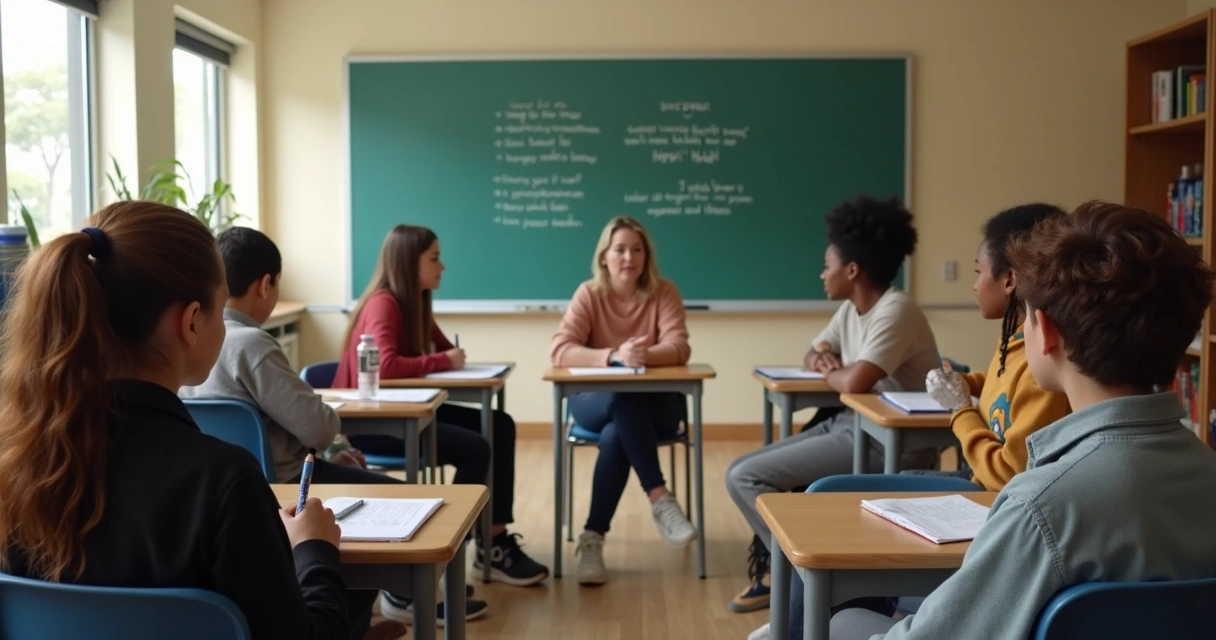
Schools do more than pass on knowledge. They shape shared emotional habits, social roles, and silent rules about worth and belonging. Some of these patterns support growth. Others limit it. When group behavior stays unconscious, people often confuse adaptation with identity.
Schools sustain unconscious group behavior when repeated norms become stronger than honest reflection.
We believe real learning includes seeing these hidden dynamics with more clarity. Once the pattern becomes visible, responsibility can be shared in a more mature way. Then a school is no longer only a place where people fit in. It can become a place where they become more awake to how they relate, choose, and affect one another.
Frequently asked questions
What is unconscious group behavior in schools?
Unconscious group behavior in schools is the set of shared habits, reactions, and social rules that students and staff follow without fully noticing. It includes things like copying peer attitudes, accepting fixed roles, avoiding social risk, or joining exclusion without open intent.
How do schools create group behavior?
Schools create group behavior through routines, rewards, labels, authority patterns, and peer pressure. Seating, grading, public praise, discipline, and informal social signals all teach students what is accepted, admired, or rejected by the group.
Why is group behavior hard to change?
Group behavior is hard to change because it gives people a sense of predictability and belonging. Even harmful patterns can feel familiar. When one person changes, the group may resist because that change unsettles roles and expectations already shared by many people.
How can teachers stop groupthink in class?
Teachers can reduce groupthink by inviting different viewpoints, slowing down fast consensus, protecting quieter students from being overlooked, and naming repeated class patterns without humiliation. It also helps to ask students how the group is reacting, not only what answer they gave.
What are examples of unconscious group behavior?
Examples include a class mocking the same student during presentations, students staying silent to avoid social exposure, peer groups deciding who is respected or ignored, and teachers expecting certain behavior from students based on old labels. These patterns often continue because many people take part in them without full awareness.