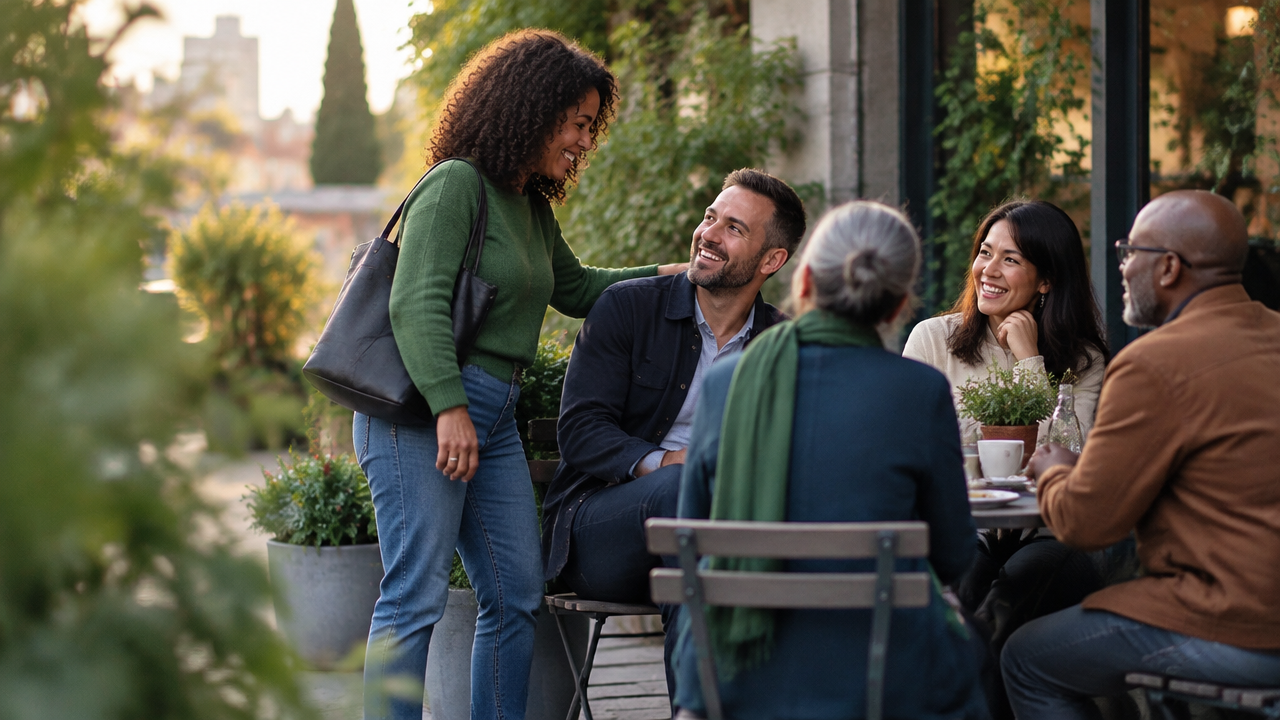
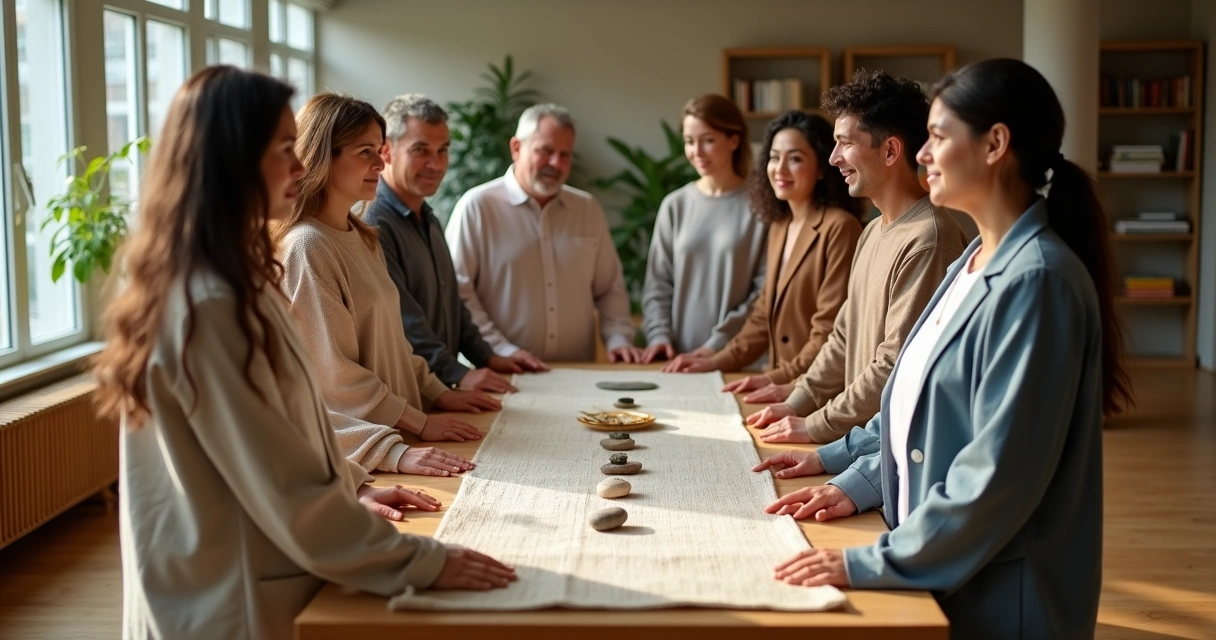
Conflict is a part of every group story. At work, in friendships, families, or communities, even small misunderstandings can leave an invisible mark. As we have seen in our experience, healing from these moments isn’t about pretending nothing happened or forcing apologies. Instead, it is about creating small rituals—shared moments with meaning—that help people feel seen, heard, and connected again.
Restoring trust and connection after conflict is possible and can be made more natural when we offer a clear path forward. Rituals serve as markers, helping groups shift the energy from disconnection back to unity. Informed by current research in psychology and group dynamics, we believe these five rituals can transform how groups move from rupture to restoration.
Why rituals matter for groups after conflict
After conflict, most groups experience emotional residue: frustration, unease, sometimes even shame. According to research from the Department of Veterans Affairs, higher unit cohesion strongly relates to better mental health and less avoidance after stressful events. Support and shared experience actually buffer the negative effects of conflict (Department of Veterans Affairs research).
Rebuilding trust begins with small, honest acts—done together.
Using rituals together does not mean sweeping problems under the rug. Instead, these acts mark a move toward listening and cooperation, sending a clear message: We acknowledge what happened, and we choose to reconnect.
Five rituals that restore group cohesion
Let’s look at five rituals that we have seen make a real difference. Each can be adapted to fit your group, whether you’re coworkers, students, friends, or family.
1. Acknowledgment circle
The first step is always recognition. A group acknowledgment circle invites each member to briefly share their thoughts on the conflict—not to rehash blame, but to name their experience. The guidelines are simple:
- One person speaks at a time, using “I” statements ("I felt left out when...").
- Others listen without interrupting.
- No solutions are offered during this round—only honest sharing.
This ritual makes every voice visible and reminds the group that each person’s reality matters. According to studies from Stockholm University, witnessing moral acts and respectful communication can foster positive emotions and even reduce prejudice among group members (Stockholm University study).
The group does not need to agree on every detail. The goal is to allow space for emotion without immediately chasing resolution.
2. Shared restorative activity
Sometimes, talking is too hard. In these moments, doing something practical together can carry its own healing power. This might mean preparing a meal, tidying a shared space, planting something, or creating art.
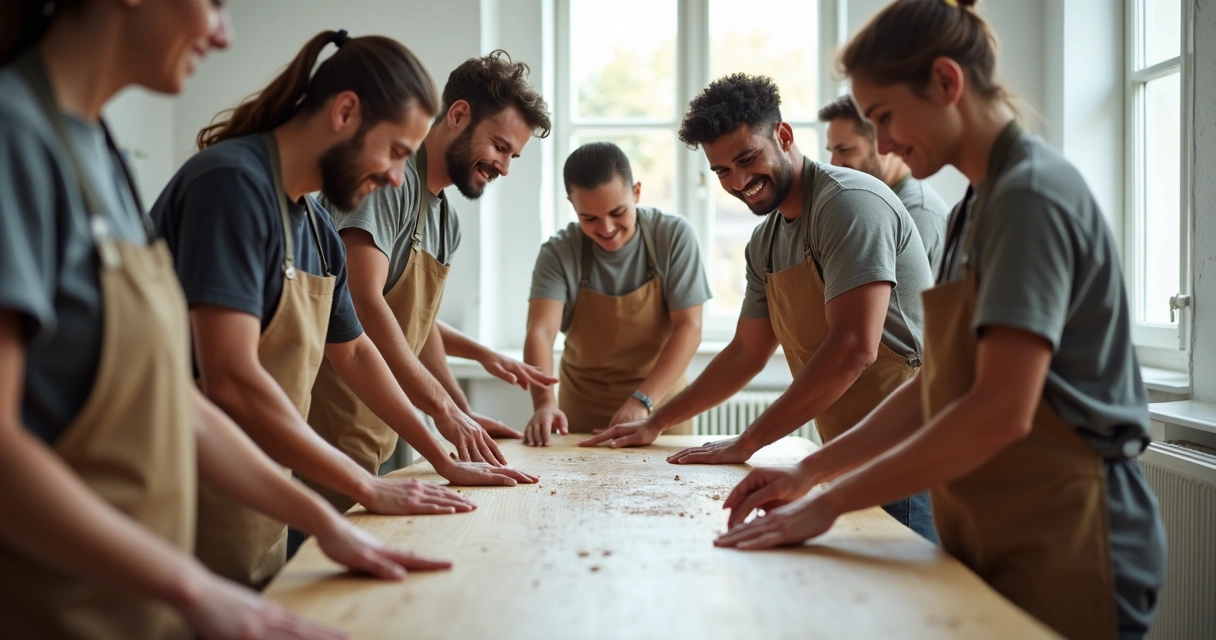
The ritual works because active cooperation re-establishes interdependence and trust. Research from Vrije Universiteit Amsterdam shows that joint tasks, especially in a crisis, increase social cohesion by promoting cooperation and support (Vrije Universiteit Amsterdam findings).
Doing things together is another way to talk—without words.
Choose an activity with clear steps and a beginning and end, so you all move forward together.
3. Gratitude round
After a rupture, it’s common for groups to focus on disappointment. Flipping the script through a “gratitude round” can reset the emotional tone.
- Everyone names one thing they appreciate about another member or the group as a whole.
- The focus stays gently on genuine positives—even if they feel small.
Naming gratitude, even awkwardly at first, fosters softer feelings. It encourages everyone to reconnect with what brought them together in the first place. This echoes the evidence that moral elevation (seeing or acknowledging goodness in others) boosts positive emotions and helps repair group relationships (see Stockholm University findings).
A simple thank you can restore dignity, remind us of common goals, and invite warmth back into a tense space.
4. Commitments for the future
Forgiveness does not erase the need for change. For a group to truly move forward, it helps to make small, clear commitments together. This can be done out loud or written down. Examples include:
- “I promise to check in before making decisions that affect everyone.”
- “We’ll review how to handle disagreements at our monthly meeting.”
- “I’d like to ask for clarity next time instead of withdrawing.”
Recording these commitments, even informally on a scrap of paper or a group message, signals a group’s intent to grow. This small act shifts energy toward action, rooting hope in practical behavior.

Change sticks when we say it out loud—and do it together.
5. Closure ritual
Closure is both an end and a beginning. Marking the moment together helps release old tension, making space for something new. This ritual can be adapted to your group's style:
- A moment of silence, holding hands or sitting quietly.
- Lighting a candle or planting something as a living symbol of renewal.
- Sharing a meal, song, or group photo to mark the return to connection.
Closure rituals show that repair is complete enough, and the group is ready to move forward as a unit. Evidence from community-level reconciliation efforts, such as those noted in research from Sierra Leone, points to the importance of closure and symbolic acts for building social capital, though it also shows that emotional processing can be complex (Science publication on reconciliation).
Keep it simple and heartfelt. The power lies in sharing the moment.
Common challenges and reflections
Some groups resist rituals at first, especially if they feel awkward or artificial. We have noticed this most when people worry about being forced to forgive or pretending the conflict had no impact.
The key is to focus not on perfection, but participation. Keep rituals short and optional. Remind the group:
Rituals do not erase the past, but they help create a new future.
Each group needs to adapt, finding gestures and words that fit its unique culture, history, and language.
Conclusion
Conflicts are natural, but so is reconciliation. Shared rituals are not magic, but they start a process of healing, especially when they feel sincere and co-created. By acknowledging pain, acting together, expressing gratitude, agreeing to new commitments, and marking closure, we see firsthand that groups can rebuild trust and connection.
The path to group cohesion is not about erasing the past, but about stepping forward as a stronger, wiser team.
Frequently asked questions
What are group cohesion rituals?
Group cohesion rituals are repeated, shared actions that help members feel connected, seen, and valued after periods of disruption or conflict. These can include talking circles, shared meals, or symbolic acts like writing commitments or holding a closure moment. They help mark transitions and create a renewed sense of unity.
How to restore group cohesion after conflict?
Restoring group cohesion starts with acknowledging the conflict, allowing each voice to be heard, and creating shared experiences that rebuild trust and connection. We suggest using clearly defined rituals such as acknowledgment circles, shared activities, gratitude rounds, future commitments, and closure moments to shift from disconnection to unity.
Which rituals work best for teams?
The most effective rituals are those that fit the team’s culture and context. Structured, yet flexible approaches like open acknowledgment, shared tasks, gratitude exchanges, written commitments, and simple closure acts encourage participation and real engagement. Small, meaningful acts are often more effective than large, formal ones.
When should these rituals be used?
It is helpful to use these rituals soon after conflict or tension, once emotions have calmed enough for respectful participation. They work best when there is a shared desire to reconnect and move forward as a group. Regular use, even when no major rupture occurs, can also reinforce trust within the team.
Are group rituals effective for conflict?
Research suggests that group rituals can be very effective in repairing relationships, fostering empathy, and marking transition points after conflict. They give structure to reconciliation and make space for positive emotions, which supports long-term cohesion and resilience.