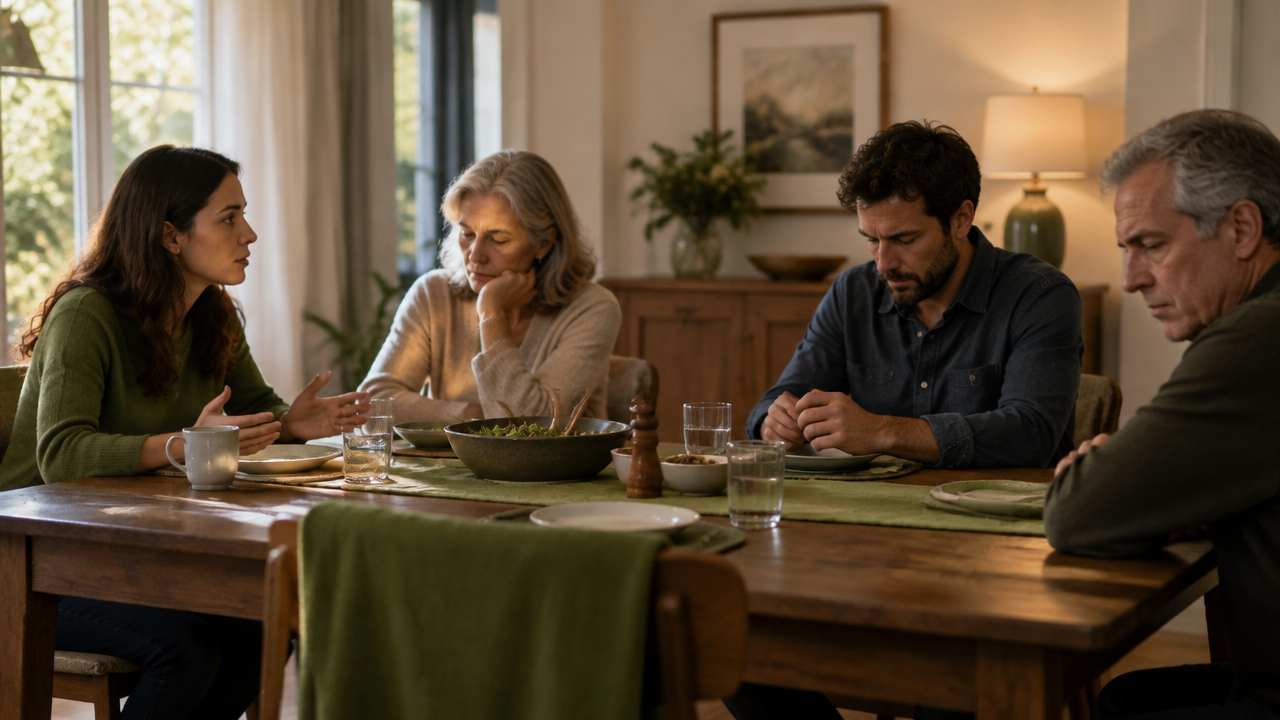

We often think of inheritance in material terms—money, property, keepsakes. Yet, there is an invisible legacy that quietly shapes families, organizations, and entire societies. This is emotional inheritance: the transmission of emotional pain and collective trauma across generations, often without a single word being spoken.
Our pain is older than our own stories.
In our work and reflections, we see how unresolved hurt and fear can move silently from one generation to another. Sometimes, it feels as if we are living out a script written years before we were born.
How does emotional inheritance happen?
Emotional inheritance refers to the patterns of feeling, response, and coping that get passed down through relationships, not genetics alone.We see it in repeated family arguments, shared anxieties, or beliefs about the world and one's place in it. But how does this transfer actually occur?
- Through the stories we tell and the silences we keep, entire groups can absorb a shared mood or history.
- Children watch adults handle stress, grief, or anger, absorbing unspoken lessons.
- Organizations can unconsciously repeat cycles of blame or mistrust long after the original cause has faded.
- Communities shaped by war, displacement, or discrimination may carry a collective heaviness not found in official records.
In recent years, research has provided scientific evidence for the reality of emotional inheritance. Studies such as the 2024 study in the journal Life show that trauma can leave marks not only on minds, but on bodies—sometimes even in our genes.
The science: Trauma, genes, and epigenetics
It is now known that intense group pain—whether from war, famine, oppression, or disaster—can actually produce changes in gene expression that influence how future generations respond to stress. This is sometimes called epigenetic inheritance.
According to research from the James J. Peters Veterans Affairs Medical Center, cultural trauma can lead to epigenetic changes. These subtle modifications in DNA expression can shape how descendants react not just emotionally, but physiologically, to new challenges or threats.
A 2023 review in the journal Genes summarizes that stress experienced by one generation can become 'embedded' biologically, increasing the risk for anxiety, depression, or other stress-related difficulties in the next.
So, emotional inheritance is neither fully fate nor just learned behavior—it's a dance between experience, biology, and the living system of relationships.
What does group pain look like?
Not all emotional inheritance looks the same. We have observed that pain shared by groups can appear in several ways:
- Unexplained fear or sadness that seems older than any present event
- Rituals or family rules that keep certain topics forbidden
- Persistent mistrust between groups or communities, even years after conflict
- Unconscious loyalty to suffering: the idea that healing or success somehow betrays past victims
These patterns are not just personal struggles—they are systems problems, woven into relationships, cultures, and collective habits.
The impact on individuals
We have seen how group pain can quietly shape identity. Descendants of trauma survivors, according to a 2025 systematic review in BMC Psychology, often experience elevated rates of anxiety, hypervigilance, or even guilt for suffering they never lived personally.
Sometimes, people ask themselves, “Why do I feel so weighed down?” It can be a clue that the emotion belongs not just to them, but to their wider system.
Making the invisible visible: Recognition is the first step
Bringing group pain into awareness is the first and most powerful move toward change.When we name inherited patterns, we open the possibility for healing and more conscious choices.
Recognition does not mean blaming those who came before, nor does it allow us to escape our own responsibilities. Rather, it clarifies which burdens are truly ours to carry, and which are echoes from the past.
Paths to healing collective trauma
There is no single path, but in our experience, some approaches can help loosen the grip of inherited pain:
- Gentle curiosity about family myths, secrets, and “untouchable” feelings
- Open conversations about history—what happened, how it was handled, what was left unsaid
- Therapeutic work that embraces not only the individual, but the larger relational or systemic context
- Group or community rituals that honor, rather than erase, difficult histories

It is in these spaces of recognition and connection that the cycle can begin to transform.
We cannot change what happened, but we can decide what comes next.
Conclusion: Toward conscious choice and integration
Emotional inheritance is real, often invisible, but not impossible to change. We do not have to repeat the past if we can see it for what it is. New patterns are possible when we bring compassion, courage, and honesty to our shared histories and relationships.
Group pain may travel through time, but so can healing and wisdom.With each honest choice, we do more than help ourselves—we open a wider space for everyone connected to us, now and in the future.
Frequently asked questions
What is emotional inheritance?
Emotional inheritance is the transmission of feelings, coping patterns, beliefs, and even unresolved trauma from one generation to the next. This legacy can pass through stories, behaviors, cultural rules, or even biological changes caused by group experiences.
How does group pain affect individuals?
Group pain can create a shared emotional environment. Individuals within families, organizations, or communities may experience anxiety, fear, or shame that seems out of proportion to their direct experience. These emotions might feel confusing because they often arise from unresolved collective history rather than personal events.
Can trauma be passed through generations?
Yes, scientific studies have confirmed that trauma can affect the descendants of those who lived through it. Research into epigenetic inheritance in PTSD has shown that trauma can make subtle changes in gene expression, influencing how future generations respond to stress and challenge.
How can I heal inherited emotional pain?
Healing starts with awareness. Practices include learning about your family or group history, open conversation, therapy that acknowledges systemic dynamics, and, in some cases, community or cultural rituals that honor both pain and resilience. These steps help unbind inherited emotions and allow for more conscious living.
Why does group pain last so long?
Group pain continues across generations because it becomes woven into the collective behavior, beliefs, and even biology of a system. Without recognition and active steps toward healing, these patterns remain stuck, repeating through unconscious loyalty or silence. Healing is possible when awareness meets intentional action.